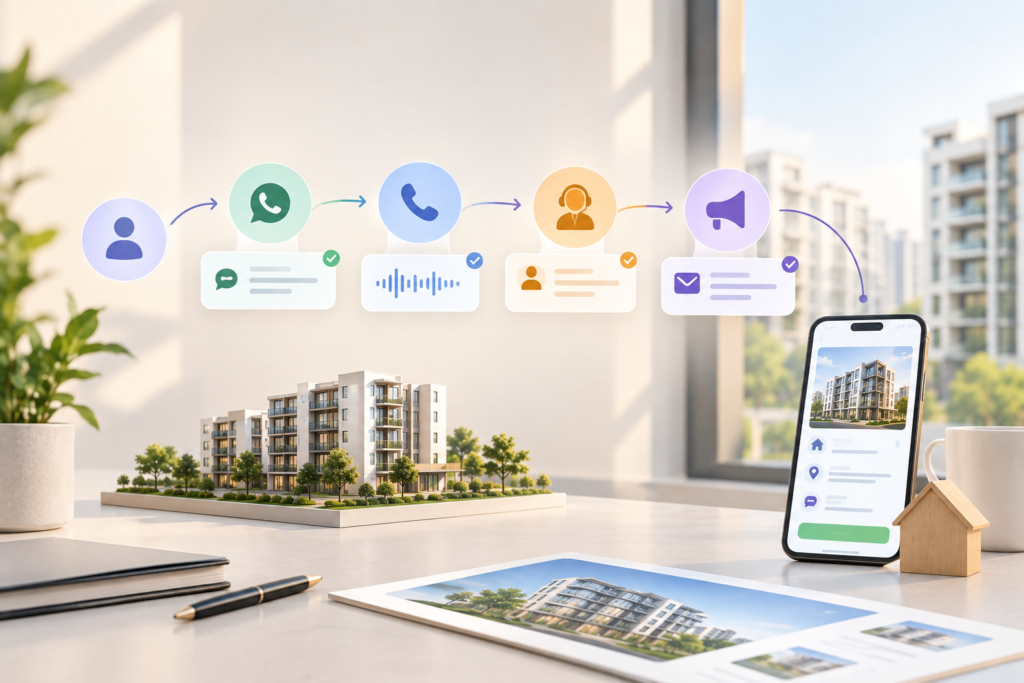
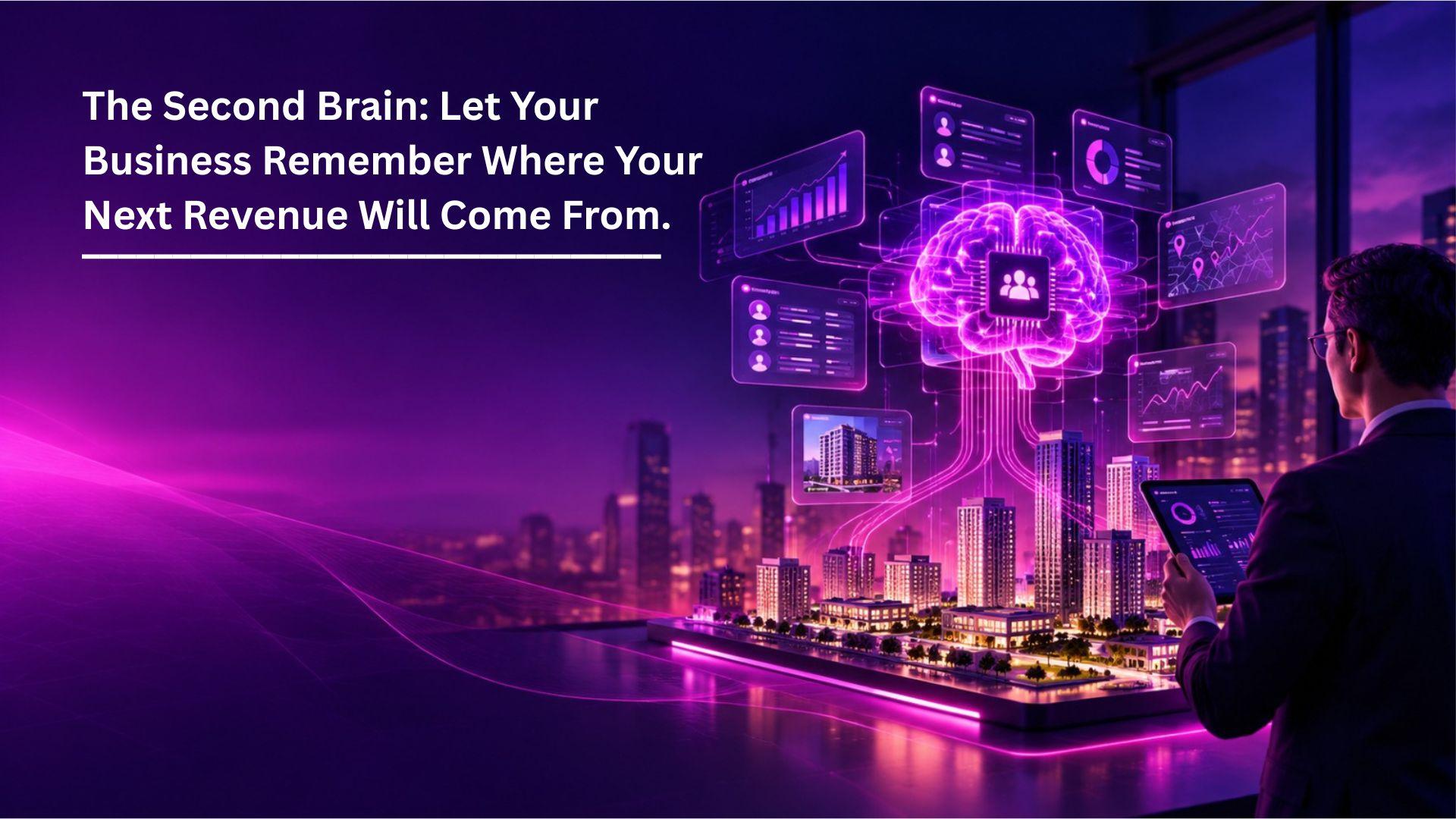
Every conversation holds a clue. Every buyer leaves a signal. Every booking tells a story. The intelligence to connect them all.
A buyer enquires about a ₹2 crore apartment in Mumbai. Marketing knows which advertisement generated the lead. Presales knows the buyer’s budget. The salesperson remembers the objection raised during the site visit. The channel partner knows the family’s preferences. The closing manager knows why negotiations stalled.
But does the organisation know all of this together?
In many real estate businesses, the answer is no. The information exists, but it is scattered across CRM entries, phone calls, WhatsApp conversations, spreadsheets, individual employees, and management reports.
This is not merely a technology problem. It is a revenue visibility problem.
As Indian developers expand across projects, cities and channel-partner networks, a conventional approach to customer relationship management can leave critical gaps between enquiry and booking. Even an enterprise CRM such as Salesforce can deliver limited business value when workflows, data, adoption and industry-specific intelligence are not aligned.
What if your real estate CRM could do more than store information? What if it could help your organisation remember customers, connect decisions, and learn from every sales journey?
That is the thinking behind Absolute Customer Experience (ACX) Totality – the Second Brain for Indian real estate.
1. Managing Director / Promoter: What If You Could Ask Your Business a Question and Get an Answer?
What matters to them: Revenue, profitability, project performance, business predictability, and the ability to scale without losing control.
Their problem: Imagine running five projects across three cities. One is generating enquiries but not bookings. Another is receiving site visits but struggling to close. A third appears healthy until collections and transaction progress reveal a different picture. The promoter asks, “What is happening?” and receives three presentations, four spreadsheets, and five different explanations.
The information exists. What is missing is the connection.
Why ACX Totality as the Second Brain?
A promoter should not have to become a data analyst to understand the business. ACX Totality’s Second Brain vision is to make customer and revenue intelligence accessible through a connected view of the business journey. Instead of manually piecing together departmental reports, leadership should be able to ask meaningful questions about lead quality, conversion, customer objections, channel contribution, and booking outcomes.
The ambition goes beyond displaying what happened. It is to understand the signals behind it, subject to the data available and the capabilities configured.
Why must dashboard dependency disappear?
Leadership needs answers, not another screen to interpret. A conversational, question-led experience can reduce the effort required to find information and investigate business performance. Rather than navigating multiple reports, a promoter could ask, “Why are site visits converting poorly in this project?” and explore the available evidence.
The competitive advantage is clarity. When business knowledge becomes accessible without depending on a chain of manual reports, leadership can focus on decisions, not data collection.
The Second Brain promise: Your business should not need to wait for its next review meeting to begin explaining itself.
2. CEO / COO: What If Every Department Understood the Same Customer Journey?
What matters to them: Operational efficiency, accountability, coordination, consistency, and execution across projects.
Their problem: Marketing generates the enquiry. Presales qualifies it. Sales conducts the site visit. A closing manager negotiates. Booking processes the transaction. Every department performs its part, yet the customer experiences one continuous relationship.
When information fails to move with that relationship, the organisation behaves like several disconnected businesses. Customers repeat themselves, employees chase updates, and leaders spend valuable time resolving misunderstandings that should never have occurred.
Why ACX Totality as the Second Brain?
ACX Totality is designed around the connections that shape a real estate sale: Lead, Contact, Conversation, Visit, Proposal, Booking and Attribution. These Seven Links create a common foundation for understanding how customer relationships progress from first enquiry to revenue.
For a COO, the value lies in continuity. When a buyer moves from presales to project sales, the available context should move with them. When a site visit produces an objection, that information should inform the next action. When a booking progresses, the preceding journey should remain traceable.
This is how a system can help an organisation work as one business instead of a collection of departments.
Why must dashboard dependency disappear?
Operational leaders should be able to investigate exceptions through direct questions rather than repeatedly assembling reports from different teams. “Which opportunities are waiting for action?” or “Where are handovers breaking down?” should lead to relevant information, not another exercise in data collection.
A question-led experience can make operational intelligence easier to access while preserving the controls and records necessary for accountability.
The Second Brain promise: One customer journey. One connected understanding. Fewer gaps between knowing what happened and making sure something happens next.
3. Chief Marketing Officer / Head of Marketing: What If You Could Follow Every Marketing Rupee to a Booking?
What matters to them: Campaign effectiveness, cost of acquisition, source quality, return on marketing investment and revenue attribution.
Their problem: An Indian developer spends heavily across property portals, Google, Meta, outdoor advertising, channel partners, and launch campaigns. The enquiries arrive. The reports look encouraging. Yet the bookings do not always justify the spend.
Was the campaign targeting the wrong audience? Were the leads poorly qualified? Did the follow-up fail? Did customers lose interest after discovering the actual price? When marketing activity and sales outcomes remain disconnected, the answers become assumptions.
Why ACX Totality as the Second Brain?
Totality’s Attribution link is designed to connect lead sources with the subsequent customer journey. Instead of stopping at enquiry volume, the organisation can work towards understanding which sources contribute to qualified opportunities, site visits and bookings.
The Second Brain adds a more valuable question: what can customer interactions teach marketing about intent, preferences and objections?
For example, if enquiries from a particular campaign repeatedly express interest but hesitate over payment plans, marketing and sales can investigate whether the audience, offer or communication needs refinement. The system becomes a foundation for learning across campaigns rather than a passive record of lead generation.
Accurate attribution depends on reliable source tagging, connected records, and agreed measurement rules.
Why must dashboard dependency disappear?
Marketing leaders should be able to ask, “Which sources are contributing to bookings?” or “Where are campaign-generated leads dropping off?” and access the relevant evidence without manually reconciling multiple reports.
The goal is not to eliminate measurement. It is to eliminate unnecessary effort between asking a business question and understanding the available answer.
The Second Brain promise: Stop celebrating enquiries in isolation. Understand the customer journey that turns marketing investment into business outcomes.
4. Head of Presales: What If Your Team Never Had to Rediscover a Buyer?
What matters to them: Lead response, qualification, follow-up consistency, customer intent, and site-visit generation.
Their problem: A buyer enquires about a property in Pune. They explain their budget, preferred configuration, possession expectations, and concerns about the payment schedule. A presales executive records some information, forgets the rest, and moves to the next enquiry.
Two days later, another executive calls. The buyer repeats the same requirements. A week later, the sales team asks the same questions again.
The organisation has contacted the customer multiple times but has not necessarily built a better understanding of them.
Why ACX Totality as the Second Brain?
The Second Brain is especially relevant to presales because customer context is the foundation of every subsequent interaction. ACX Totality’s lead-management approach is designed to connect customer details, conversations, and follow-up activity throughout the sales journey.
Where ACX Convo AI and relevant integrations are deployed, conversational intelligence can further support lead engagement, transcription, intent analysis, and post-call insights. This can help teams retain information that might otherwise remain trapped in individual conversations.
Consider a buyer who wants a three-bedroom home, prefers a particular location, and needs time to discuss the purchase with family. The next interaction should reflect those requirements rather than begin with a generic sales script.
Why must dashboard dependency disappear?
Presales managers should not need to inspect multiple screens to discover which leads need attention. They should be able to ask, “Which qualified buyers have not received their next follow-up?” or “What are buyers most frequently objecting to?” and investigate the available records.
That makes intelligence more accessible to the people responsible for acting on it.
The Second Brain promise: Every meaningful conversation should make the next conversation smarter. Your team should remember the buyer’s journey, even when the person handling the lead changes.
5. Presales Team Leader: What If You Spent Less Time Chasing Agents and More Time Improving Them?
What matters to them: Team productivity, call quality, follow-up discipline, qualification standards, and target achievement.
Their problem: A presales team leader begins the day asking agents for updates, checking pending calls, and chasing explanations for untouched leads. By the afternoon, much of the manager’s time has gone into discovering what the team did instead of improving how the team performs.
Call counts alone do not reveal whether a buyer was understood, whether an objection was handled effectively, or whether a clear next action was agreed upon.
Why ACX Totality as the Second Brain?
Totality’s Second Brain approach aims to make the context behind sales activity easier to access. Managers can use connected lead records and workflow visibility to investigate follow-up gaps, lead ageing and qualification patterns. Where conversational analytics are available, they can also use call insights to identify recurring customer concerns and coaching opportunities.
Suppose several buyers hesitate because they do not understand the payment structure. That pattern may indicate a coaching need, a communication issue, or a requirement for better sales material. The opportunity is to move from managing isolated agents to learning from repeated interactions.
The system does not replace the manager’s experience. It helps that experience focus on the right problems.
Why must dashboard dependency disappear?
A manager should be able to ask, “Which agents have the highest number of overdue follow-ups?” or “What objections are recurring this week?” and get to relevant information without assembling reports manually.
A direct question should lead to an actionable investigation, not a tour through multiple screens.
The Second Brain promise: Give managers back the time they need to coach, correct, and improve. Let the system help surface the work that deserves their attention.
6. Head of Sales / Project Sales Head: What If Every Site Visit Arrived With a Memory?
What matters to them: Site visits, conversion, sales-team performance, inventory movement, and project revenue.
Their problem: A prospect arrives at a project site after several calls with presales. The salesperson may know the customer’s name and budget but not the concern that has prevented the buyer from committing. The customer repeats their preferences, the salesperson starts discovery again and the opportunity loses momentum.
After the visit, feedback may remain in a personal notebook or an informal message. The next follow-up then depends on whether someone remembers what mattered.
Why ACX Totality as the Second Brain?
Totality’s Seven Links connect the lead and conversation with the visit, proposal and eventual booking. This creates the foundation for preserving context as a buyer moves between teams and stages.
Its site-visit intelligence capabilities, where enabled, can help organise visit feedback, customer preferences, objections and follow-up opportunities. The salesperson can approach the next interaction with a more complete understanding of what the customer has already communicated.
The objective is not to make every buyer follow a rigid funnel. Real buyers compare properties, consult family members, revisit projects and change priorities. A useful CRM should help the organisation understand that journey rather than force the customer to repeat it.
Why must dashboard dependency disappear?
A sales head should be able to ask, “Which site visits have not progressed?” or “Why are buyers postponing decisions after visiting this project?” and explore the relevant records.
The answer should help the manager decide whether to intervene, coach a salesperson, or address a recurring customer concern.
The Second Brain promise: A site visit should not end when the customer leaves the property. It should leave the organisation with knowledge that makes the next interaction more relevant.
7. Closing Manager / Senior Sales Manager: What If You Knew What Was Really Stopping the Booking?
What matters to them: Negotiation progress, closing rates, buyer objections, commercial approvals, and booking readiness.
Their problem: The customer likes the apartment but is uncertain about the price. Another wants a different floor. A third needs family approval. A fourth is waiting for clarification on the payment schedule.
From the outside, these opportunities may all look like interested buyers. In reality, each requires a different conversation. When the history is incomplete, the closing manager is forced to reconstruct the situation before helping the buyer move forward.
Why ACX Totality as the Second Brain?
ACX Totality aims to preserve the customer context that accumulates throughout the journey: preferences, prior conversations, visit feedback, proposals, and recorded next steps.
That information can help a closing manager understand whether an opportunity is delayed because of a commercial objection, an unanswered question, or a missing follow-up. Where the relevant proposal, approval and transaction workflows are configured, the CRM can also connect negotiation activity to booking progress.
This is not a promise that AI can persuade every buyer. It is a way to reduce avoidable information gaps so experienced salespeople can make better-informed decisions.
Why must dashboard dependency disappear?
Instead of opening separate reports to locate stalled negotiations, a closing manager should be able to ask, “Which high-intent opportunities are awaiting action, and what is the recorded reason?” The resulting information should help prioritise the next conversation.
A system that makes this information accessible can support better intervention without requiring managers to personally track every deal.
The Second Brain promise: A buyer’s hesitation is not just a status to update. It is a signal to understand. The more accurately the organisation remembers that signal, the better equipped its people are to respond.
8. Head of Channel Sales: What If Every Partner Relationship Could Be Understood Beyond Enquiry Volume?
What matters to them: Partner productivity, lead ownership, sourcing quality, attribution and channel-generated bookings.
Their problem: Developers in India often work with extensive broker networks. Some partners produce consistent business; others send occasional enquiries. Lead ownership disputes, duplicate registrations, and inconsistent follow-ups can make it difficult to distinguish genuine contribution from activity.
The relationship becomes harder to manage when the channel team must rely on separate spreadsheets and individual recollections to explain what happened to a partner’s leads.
Why ACX Totality as the Second Brain?
Totality’s Attribution link provides a framework for understanding how sourced leads progress towards visits and bookings. When partner records, customer journeys and transaction outcomes are connected, the organisation can work towards a clearer view of which relationships generate qualified opportunities and revenue.
The Second Brain also supports continuity. When a channel relationship manager changes, the history of partner interactions and associated opportunities should not disappear with the employee. Shared context helps the next person continue the relationship with better information.
For this to work, developers need clear rules for partner registration, ownership, attribution, and duplicate resolution. Technology can make those rules more visible; it cannot substitute for establishing them.
Why must dashboard dependency disappear?
Channel leaders should be able to ask, “Which partners generated bookings this quarter?” or “Which partner-sourced opportunities are awaiting a site visit?” and retrieve the relevant evidence.
The point is to make partner intelligence accessible to the people who must act on it, rather than requiring manual reconciliation before every review.
The Second Brain promise: Know which relationships are moving your business forward, understand where opportunities are getting stuck, and build channel partnerships on clearer evidence.
9. Head of CRM / Sales Operations: What If Your CRM Answered Questions Instead of Creating More Work?
What matters to them: Data quality, process adoption, integration reliability, reporting accuracy, and operational governance.
Their problem: CRM leaders are often responsible for a system that everyone depends on, but few people consistently maintain. Teams use spreadsheets alongside the CRM. Customer stages are updated late. Different departments interpret the same status differently. Reports require manual corrections before leadership can trust them.
This is a challenge across the market, including Salesforce implementations. Platform capability alone does not guarantee adoption, reliable data, or business value.
Why ACX Totality as the Second Brain?
Totality’s real-estate-oriented framework connects Visibility, Attribution, Adoption and Outcomes—the Four Laws described in its product positioning. Its ambition is to help organisations connect customer records, business processes and revenue intelligence in one coherent operating environment.
For CRM and sales operations leaders, this means evaluating more than features. The important questions concern how well lead capture, customer history, communication, site visits, proposals and bookings fit the developer’s actual workflows.
The Second Brain becomes useful when the underlying information is trustworthy, and users can retrieve relevant context without navigating unnecessary complexity. Integrations, data governance, permissions, and migration must be designed carefully to support that outcome.
Why must dashboard dependency disappear?
The objective is not to remove visibility or accountability. It is to remove dependence on manually assembled reports and fragmented interfaces when a direct, reliable answer is possible.
A CRM leader should be able to investigate duplicate records, overdue activities, stage inconsistencies, and integration exceptions through accessible questions and appropriate operational views.
The Second Brain promise: Your CRM should not become another job your organisation must feed. It should make the work people already do more connected, understandable and useful.
10. Booking Manager / Transaction Coordinator: What If a Booking Did Not Mean Starting the Data Collection All Over Again?
What matters to them: Booking accuracy, unit selection, documentation, approvals, payment milestones and transaction handovers.
Their problem: The customer has selected a property, negotiated the terms and decided to proceed. Yet the booking team may still need to chase sales for customer details, confirm the agreed terms, and reconcile information across different records.
At the moment when the customer expects clarity and momentum, the organisation can introduce unnecessary friction because the transaction history has not travelled with the opportunity.
Why ACX Totality as the Second Brain?
The Second Brain should preserve the journey leading to the booking: the original enquiry, recorded requirements, conversations, site visits, proposals and relevant decisions. That history gives the booking team a more complete starting point.
Where configured, the relevant booking, inventory, document and payment integrations can support a more connected transaction process. These capabilities should be validated against the actual deployment rather than assumed to exist in every implementation.
The broader principle is continuity. The customer should not become a collection of disconnected records just because the responsibility has moved from sales to booking.
Why must dashboard dependency disappear?
Booking teams should be able to ask, “Which transactions are waiting for documentation?” or “What is preventing this booking from progressing?” and reach the relevant records and assigned actions.
That reduces the need to chase information across departments and helps staff focus on resolving genuine transaction blockers.
The Second Brain promise: The booking should be the culmination of an informed customer journey, not the beginning of another administrative one. When the organisation carries context forward, the people completing the transaction can concentrate on accuracy, coordination and customer confidence.
The Real Question Is Not Which CRM Has More Features. It Is Which CRM Helps Your Business Think Better.
Indian real estate does not need another layer of complexity disguised as digital transformation. It needs a way to connect the knowledge marketers, presales executives, salespeople, channel partners, closing managers, and booking teams create every day.
That is the opportunity behind ACX Totality.
Its Second Brain philosophy is built around a simple idea: capture the signal, connect the journey, understand the context, and make the next action more intelligent.
For developers comparing Salesforce with specialised real estate CRM software, the evaluation should go beyond the brand name or feature checklist. Examine how naturally the system supports real-estate workflows, preserves customer context, connects attribution to outcomes, and makes useful intelligence accessible to everyday users.
The future is not a business where everyone spends more time looking at screens to discover what is happening. It is a business where people can ask better questions, find relevant answers, and act with greater confidence.
A lead is an opportunity. A conversation is information. A site visit is a signal. A booking is an outcome. The intelligence lies in connecting them.
Absolute Customer Experience (ACX) Totality: The Second Brain for Real Estate.
Your business has a memory. Give it the intelligence to use it.
Ready to experience the Second Brain? Explore and request a demonstration built around your real estate business, from the first enquiry to the final booking.