You have thousands of leads in your CRM. But how many of those customers does your sales team actually remember?
Imagine this.
A customer enquires about a residential project. Your telecalling team understands their budget, discusses their requirements and schedules a site visit.
The customer visits the property, likes the layout, raises concerns about pricing and asks for a revised payment plan. They promise to discuss it with their family before making a decision.
A few days later, another sales executive calls.
“Sir, may I know what kind of property you are looking for?”
Sounds familiar?
The customer has already shared their requirements, discussed their concerns, and visited the project. Yet, they have to explain everything all over again.
Now ask yourself: Is this really a lead management problem, or has your organisation simply forgotten the customer?
Most real estate developers have invested in CRM systems. They have thousands of customer records, follow-up histories and sales reports. But capturing information is not the same as understanding customers.
Real estate doesn’t have a data problem. It has a memory problem.
And perhaps it is time to stop looking at CRM as just a place to store customer details.
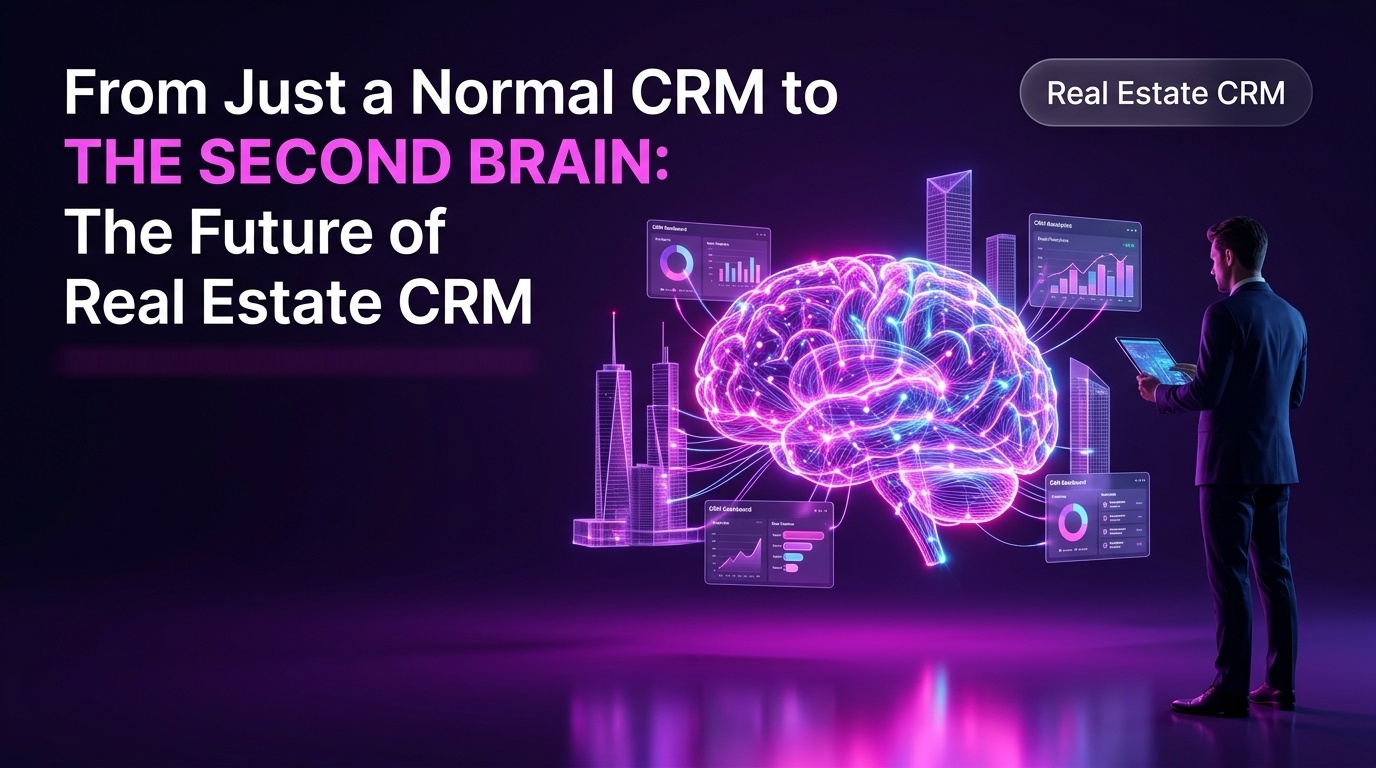
It is time to think bigger. It is time to think about THE SECOND BRAIN.
Isn’t a CRM supposed to remember everything? Then what are we missing?
A traditional CRM does a good job of organising information. It tells you who the customer is, their budget, preferred project, lead status, and next follow-up date.
But does it tell you why the customer is interested? What is stopping them from booking? What did they like during their site visit?
Consider two perspectives.
What a regular CRM remembers:
- Customer budget: ₹1.5 crore.
- Configuration: 3 BHK.
- Location preference: Whitefield.
- Lead status: Qualified.
- Last activity: Site visit completed.
What your sales team actually needs to know:
- The customer is comparing two other projects.
- Their spouse prefers a different location.
- They liked the apartment but found the pricing slightly high.
- They are concerned about possession timelines.
- They may reconsider if the payment plan works for them.
See the difference?
The first tells you who the customer is. The second tells you what the customer is thinking.
A homebuyer doesn’t decide simply because their CRM status changes. They think, compare, discuss, question, and reconsider before booking.
Your CRM should help your team understand this journey, not just remind them when to call.
ACX Totality, The Second Brain for Real Estate, is built around this shift: moving beyond storing customer information to understanding the customer.
If everyone is doing their job, why does customer information still get lost?
Because a customer’s journey involves several people.
Marketing knows where the enquiry came from. Telecalling understands the initial requirements. Sales knows what happened during the site visit. Managers monitor whether the opportunity is progressing.
Everyone knows something. But does everyone know what they need to know?
A telecaller may know that the customer is looking for a home for their parents. The sales executive may know that they liked a particular tower. The manager may know that the customer hasn’t received a follow-up in ten days.
When these details remain disconnected, the next person handling the customer starts with only half the story.
This creates everyday problems:
- Customers repeat information they have already shared.
- Sales executives miss important details from previous conversations.
- Managers spend time chasing updates.
- Good opportunities disappear because nobody remembers to follow up at the right time.
Think about how much a developer spends bringing a customer to the door. Now think about how easily that opportunity can be lost because someone forgot an important conversation.
Your organisation should not depend on individual employees remembering everything. The organisation itself should remember.
That is the thinking behind ACX Totality.
Why should your CRM remember the entire customer journey instead of just showing the sales stage?
Because customers don’t buy homes according to CRM stages.
Your CRM may show:
Enquiry → Qualified → Site Visit → Negotiation → Booking.
But a real customer’s journey is much more complicated.
They research locations, compare properties, discuss budgets with family, visit multiple projects, and sometimes disappear for weeks before getting back in touch.
Imagine a customer who initially enquires about a 2 BHK but later starts considering a 3 BHK. They visit your project, like the property, but have concerns about the payment schedule. A week later, they stop responding.
Your CRM simply shows: Follow-up Pending.
But what is actually happening? Are they no longer interested? Are they waiting for a family discussion? Is the payment plan holding them back?
Without context, your salesperson makes another routine follow-up call.
With context, the conversation changes:
“Last time we spoke, you were interested in the 3 BHK but wanted to understand the payment schedule better. Have you had a chance to discuss that with your family?”
That is a completely different experience.
The customer feels heard, and the salesperson knows exactly where to continue.
This is why remembering the customer’s journey matters more than simply tracking their sales stage.
Can AI really help a real estate sales team understand customers better?
Absolutely. But its value goes far beyond sending reminders or updating customer details.
Think about the number of conversations your sales team handles every day. Calls, site visits, customer questions, pricing discussions, and objections.
Every interaction tells you something.
One customer may be worried about possession timelines. Another may be comparing prices. Someone else may be waiting for a better payment plan.
Imagine if your business could actually learn from these conversations.
With AI in Real Estate Sales, customer information can become more useful and easier to act upon.
For example:
Understand customers better: Your sales team gets a clearer picture of customer requirements, preferences, and previous discussions.
Know what is stopping a booking: Identify recurring concerns around pricing, payment plans, location, and possession.
Make follow-ups meaningful: Instead of calling just because a reminder appears, sales executives know what the previous conversation was about.
Help managers see the bigger picture: Understand why leads are getting stuck rather than simply viewing a list of pending follow-ups.
Imagine asking your CRM:
- Which customers have visited but still have pricing concerns?
- Which interested customers haven’t received a proper follow-up?
- What are the most common reasons customers are delaying bookings?
- Which opportunities need a manager’s attention?
These are the questions that can make a real difference.
The purpose of an AI CRM for Real Estate should not be to make salespeople work like machines.
It should help them understand people better.
So, what exactly is THE SECOND BRAIN? And how does ACX Totality make it possible?
Think about your own brain. You remember conversations, connect experiences, recognise patterns and use what you have learned to make decisions.
Now imagine your business having that same ability.
Not a system that simply remembers customer names and phone numbers, but one that helps the organisation remember what customers have said, what they need and what has happened throughout their journey.
That is the idea behind a Second Brain.
ACX Totality takes the traditional Real Estate CRM beyond storing information and towards understanding the business behind that information.
It brings together customer details, sales activities and interactions to give teams a more complete picture of every customer.
It helps businesses think about five important questions:
- What do we know? Customer requirements, budgets, preferences and previous interactions.
- What has happened? Enquiries, discussions, site visits and follow-ups.
- What matters to the customer? Their expectations, questions and concerns.
- What needs attention? Pending discussions and opportunities that need action.
- What should happen next? How can the sales team make the next conversation more useful?
The idea is simple: every conversation should leave your business knowing a little more than it did before.
And that knowledge should belong to the organisation, not just one employee.
That is what makes ACX Totality THE SECOND BRAIN for Real Estate.
What difference would a Second Brain actually make to your sales team?
A CRM is only useful when it makes everyday work easier.
For customers: They don’t have to repeat their requirements every time they speak to a different representative. Conversations become more relevant and personal.
For sales executives: They spend less time searching for information and more time understanding customers, addressing concerns, and building relationships.
For sales managers: They get better visibility into pending opportunities, follow-up gaps and team performance instead of constantly chasing updates.
For developers: They can understand what customers are looking for, why opportunities are getting stuck and where their sales process needs improvement.
The biggest benefit is that customers feel heard.
They may not know what is happening behind the scenes, but they notice when a salesperson remembers their previous conversation, understands their requirements and doesn’t make them start from zero.
And that experience can make all the difference.
If Totality is the Second Brain, who makes sure people actually use it?
Here is something every developer should understand.
You can introduce the best CRM in your organisation, but if your sales team doesn’t use it properly, it will never deliver its full value.
Salespeople may continue maintaining personal Excel sheets. Managers may continue asking for updates on WhatsApp. Important customer conversations may never make it into the system.
This is where the Forward Deployed Officer (FDO) comes in.
An FDO works closely with the people who actually run the business. They understand how the sales team works, where information gets missed, and why certain processes are not followed.
Their responsibility is to help teams use Totality in their everyday work, ensure customer information is captured properly, and help managers make better use of the information available.
In simple words, the FDO connects what the technology can do with what the business actually needs.
Because buying a CRM is easy. Getting an entire organisation to use it properly is the real challenge.
Totality gives your business its Second Brain. The FDO helps make sure your people actually use it.
Why should real estate developers make this shift now?
Because your competitors are probably speaking to the same customers you are.
Imagine two developers receiving 10,000 enquiries each. Both have similar projects, marketing budgets, and sales teams.
One depends on individual memory, manual updates, and routine follow-up calls.
The other understands previous conversations, customer preferences, pending concerns, and what needs to happen next.
Who has a better chance of converting the customer?
The answer isn’t necessarily the developer who generates more leads. It is the one who understands those leads better.
Today’s property buyers have more choices. They compare projects, discuss options with family, negotiate, and take their time before making one of the biggest financial decisions of their lives.
They expect your sales team to understand what they want. They don’t want to repeat the same information five times or receive calls that have nothing to do with their actual requirements.
Every forgotten conversation creates a gap. Every missed follow-up creates an opportunity for someone else.
The longer businesses treat CRM as just a database, the more opportunities they risk overlooking.
The question is no longer whether your business needs a CRM. It is whether your CRM is helping your business understand its customers better.
What should developers look for when searching for the best Real Estate CRM in India?
For years, developers have evaluated CRM systems based on basic questions.
Can it capture leads? Assign them to sales executives? Track follow-ups? Manage site visits? Generate reports?
Of course, these things matter. But shouldn’t we expect more?
When choosing a Real Estate CRM, ask:
- Can my team see the complete history of a customer?
- Can they understand what the customer has already discussed with us?
- Can customer preferences and concerns be carried forward between sales executives?
- Can managers understand why leads are getting stuck?
- Can the system help us identify missed opportunities?
- Will it make everyday sales work easier?
- Can it support our business as we grow?
And perhaps the most important question:
Will this CRM simply store what my organisation knows, or will it help my organisation make better use of that knowledge?
That is the difference developers need to look for.
Because the best Real Estate CRM should not just help you manage more leads.
It should help you understand every lead better.
And that is what ACX Totality stands for.
The Closing Thought: Your Competitor May Not Have More Leads. They May Simply Remember More.
Think about all the customers your organisation has already spoken to.
The family that visited your project but never returned.
The customer who liked the apartment but had one unanswered question about pricing.
The prospect whose requirements never reached the next salesperson.
The customer who was marked inactive simply because nobody followed up at the right time.
How many of these opportunities were genuinely lost? And how many were simply forgotten?
Real estate developers spend a lot of time, money and effort bringing customers to their projects. But what happens after the first enquiry?
Do you remember what they asked? What they liked? What worried them? What made them hesitate?
Because customers remember these things.
They remember whether your salesperson listened, whether they had to repeat their requirements and whether your team understood what they were actually looking for.
The next big advantage in real estate will not come from having the biggest database or generating the most enquiries.
It will come from understanding the customers you already have.
From remembering every important conversation. From making sure no requirement, concern or opportunity gets lost between teams.
Your next booking could already be in your CRM. The question is: does your business remember enough to convert it?
Stop treating every lead as just another record.
Start understanding the person behind it.
Stop settling for a normal CRM.
Move beyond CRM. Build your Second Brain with ACX Totality.