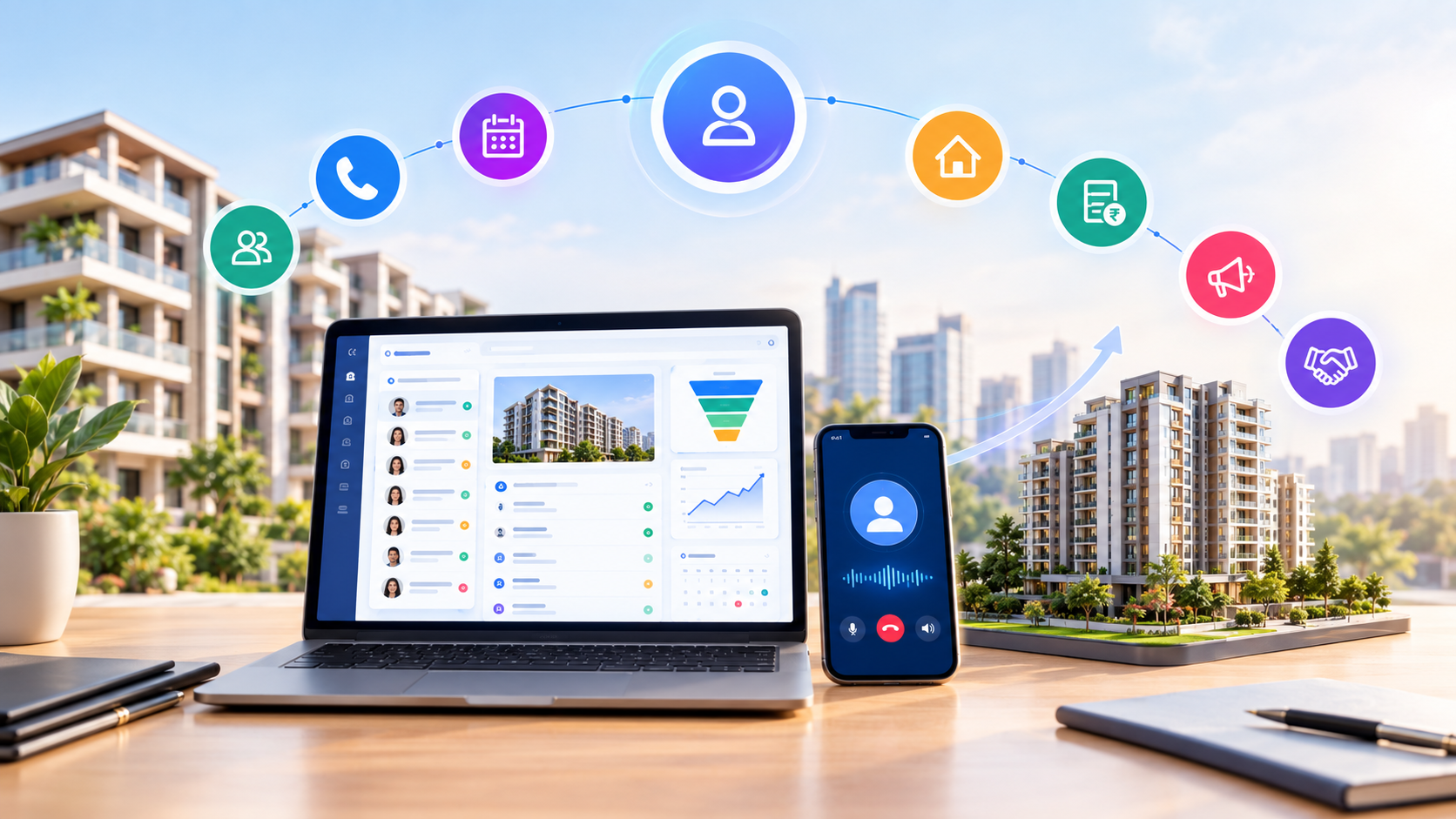
The benefits of CRM in real estate show up in three places. Leads stop leaking. Bookings close faster. Buyers pay on time and refer friends. Everything else is a means to those three.
This guide covers ten benefits developers and brokerages see when they move from spreadsheets, WhatsApp groups, and portal dashboards to one CRM. Each benefit names the problem it fixes and what changes on the ground. The examples follow a developer’s sales cycle from enquiry to possession. That is where the gaps are widest.
Why Real Estate Needs its Own CRM
A property sale is not a single transaction. It is a 6 to 18 month relationship with dozens of touchpoints. Enquiry, callbacks, site visit, cost sheet, negotiation, booking, agreement, milestone payments, construction updates, possession, and referrals.
Generic sales tools track a deal to close and stop. A real estate CRM tracks a customer through the full cycle. Its benefits come from that longer view.
1. No Lead is Missed
Problem: Leads arrive from 99acres, MagicBricks, Housing, Meta ads, walk-ins, and channel partners. Some land in a shared inbox, some on a tele-caller’s phone, some in a partner’s notebook. Nobody knows the true count.
What a CRM changes: Every source feeds one queue. Duplicates are merged, sources are tagged, and each lead has an owner from the moment it arrives. The pre-sales management view shows the whole funnel in one place.
Result: Marketing spend is measured against real leads, and no enquiry sits unanswered because it landed in the wrong inbox.
2. Faster First Response
Problem: The buyer who enquires at 9 pm hears back at 11 am the next day. Two competing developers have already called.
What a CRM changes: New leads route to an available executive instantly, with alerts and SLA timers. With AI calling built in, the first conversation happens within a minute at any hour inside the permitted calling window.
Result: Speed to first contact becomes a managed metric rather than a matter of who was at their desk.
3. Higher Site Visit Conversion
Problem: Site visits are booked over the phone, confirmed on WhatsApp, and tracked nowhere. No-shows are high and nobody follows up on visit feedback.
What a CRM changes: Visits are scheduled, confirmed, and reminded from the system. Site visit management records check-in, the units shown, and the buyer’s feedback. The follow-up is specific to what they saw.
Result: Fewer no-shows, and every visit produces data the next conversation can use.
4. Consistent Follow-up
Problem: Follow-up depends on the executive’s memory. Leads go cold after the second call because nothing prompts the third.
What a CRM changes: Every lead has a next action and a due date. Overdue tasks surface to managers. Templated WhatsApp and email sequences keep warm leads engaged between calls, with no manual effort.
Result: Pipeline stops leaking between stages. That is where most developers lose the majority of their qualified leads.
5. Accurate Inventory and Zero Double Bookings
Problem: Two executives block the same unit for two buyers on launch day. A cost sheet quotes a price that changed last week.
What a CRM changes: Inventory lives in the system with live status per unit. Blocking, cost sheet generation, and booking happen in one flow. A unit cannot be sold twice and pricing is always current.
Result: Launch days run without disputes, and finance trusts the booking data.
6. Clean Channel Partner Management
Problem: Channel partners bring a large share of bookings. Attribution disputes and delayed payouts sour the relationship. Onboarding a new partner takes days of paperwork.
What a CRM changes: Channel partner management handles registration, lead tagging at source, activity logs, and payout calculation from one record. Both sides see the same trail.
Result: Partners activate faster and stay loyal. They get paid correctly and on time.
7. On-time Collections After Booking
Problem: Demand letters go out late. Reminders depend on a collections team working through a spreadsheet. Payments slip at every construction milestone.
What a CRM changes: Milestone-linked demand letters generate automatically. Reminders go out on schedule by WhatsApp, email, or voice. Post-sales management tracks receipts, disputes, and escalations against each customer.
Result: Cash flow is predictable, and the collections team spends its time on exceptions.
8. Better customer experience through possession
Problem: After booking, the buyer’s only contact is the sales executive, who is busy selling. Document requests, construction updates, and possession queries pile up unanswered.
What a CRM changes: One customer record carries into post-sales. Documents, construction updates, and helpdesk tickets are visible to the buyer and the team. Queries route to the right department, not to whoever sold the flat.
Result: Buyers feel looked after between booking and handover. That period decides whether they refer anyone.
9. Measurable Marketing Spend
Problem: Marketing reports cost per lead by campaign. Sales reports bookings by executive. Nobody connects the two. Budget goes to channels that produce enquiries rather than buyers.
What a CRM changes: Every lead carries its source through to booking. Marketing automation reports cost per site visit and cost per booking by channel, not just cost per lead.
Result: Budget shifts to the channels that produce buyers. Campaigns are judged on revenue, not enquiries.
10. Management Visibility in Real Time
Problem: The Monday review runs on numbers compiled Sunday night from five spreadsheets. By the time a problem shows, it is three weeks old.
What a CRM changes: Dashboards show funnel movement, executive activity, visit to booking ratios, and collections status as they happen. With call transcription and scoring added, managers also see how calls went, not just how many happened.
Result: Decisions are made on current data. Coaching is specific. Forecasts hold.
The Benefits Compound on One Platform
Each benefit stands alone. Together they compound. Each stage feeds the next.
| Stage | Benefits | What it feeds |
| Pre-sales | Lead capture, fast response, follow-up | More qualified site visits |
| Sales | Visit conversion, inventory control, CP management | More bookings, fewer disputes |
| Post-sales | Collections, customer experience | On-time cash, referrals |
| Management | Marketing attribution, real-time visibility | Better decisions across all stages |
Split these across a lead tool, a booking spreadsheet, and a collections tracker, and every handoff loses data. Keep them on one customer record and the benefits multiply.
How to Realise the Benefits of CRM in Real Estate
Three habits separate developers who see these results from those who buy a CRM and keep using WhatsApp.
- Make the CRM the only source of truth. If a lead, visit, or booking is not in the system, it did not happen. Managers review from the CRM, never from a spreadsheet.
- Automate the routine before adding features. Lead routing, visit reminders, and demand letters should run without human effort in the first month. Add advanced reporting once the basics are trusted.
- Extend past booking. The largest gains sit in collections and customer experience. Choose a CRM that covers post-sales rather than one that ends at the sale.
Conclusion
The benefits of CRM in real estate are practical. Fewer lost leads. Faster bookings. Collections on schedule. Buyers who refer. They arrive when the whole customer journey runs on one record.
AbsoluteCX is built for that journey. Its pre-sales, sales, post-sales, loyalty, channel partner, and facility management modules carry a single customer record from first enquiry to possession. Conversational AI handles the calls, and Salesforce sits underneath. Developers get every benefit in this guide from one system rather than five.