
A prospective homebuyer asks about possession timelines during a call. Three days later, they receive a generic message: “Are you still interested in our project?”
The message has been sent on time. But it has ignored the most important detail from the previous conversation.
Now imagine the same buyer receives a relevant update addressing their possession concern, followed by a clear next step. The difference is not the number of follow-ups.
It is the context behind them.
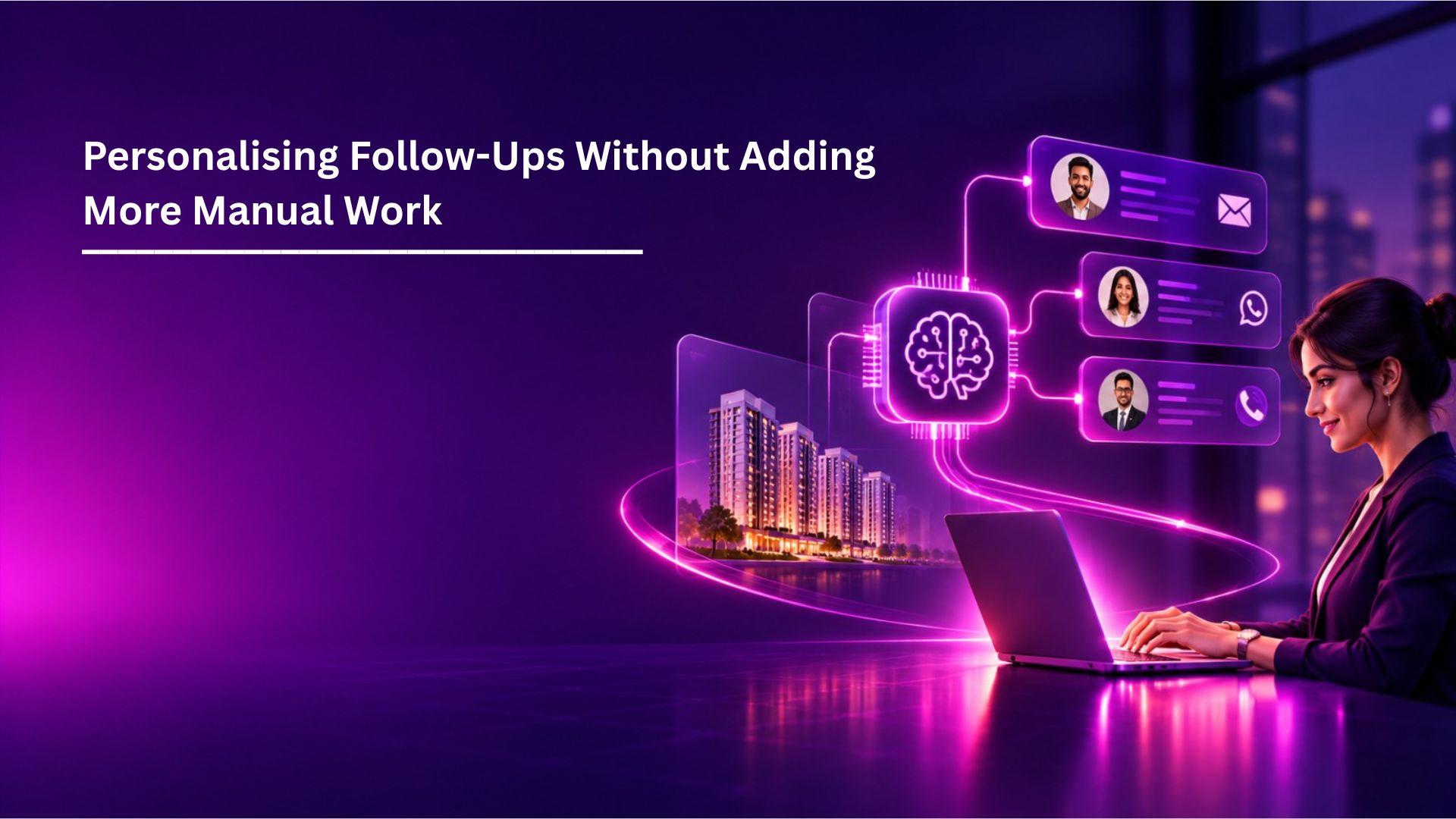
For real estate developers managing hundreds or thousands of enquiries, personalised follow-up automation helps teams make customer communication more relevant without increasing the burden of manual work.
Why Fixed Follow-Up Cadences Often Fall Short
Many sales teams follow a predefined schedule: call on day one, send a message on day three and follow up again a few days later.
A consistent cadence can help prevent leads from being forgotten. However, it does not account for the fact that buyers move at different speeds and have different concerns.
Consider three prospects:
- Buyer A wants to schedule a site visit but needs to confirm availability with their family.
- Buyer B has visited the project and wants clarification on the payment plan.
- Buyer C is comparing possession timelines across two projects.
Sending all three the same message on the same day treats very different situations as identical.
Buyer A needs help scheduling a visit. Buyer B needs a response about the payment plan. Buyer C needs relevant information about possession. The next action should depend on the customer’s last interaction, not just the number of days since the enquiry.
What Makes a Real Estate Follow-Up Personalised?
Personalisation is not simply adding a customer’s name to a WhatsApp message. It means using relevant information from previous interactions to determine what the customer needs next.
A useful follow-up considers three elements:
1. Customer context: What did the buyer ask, prefer or object to during the last interaction?
2. Journey stage: Is the buyer at the enquiry, qualification, site visit, commercial discussion or booking stage?
3. Next action: Does the customer need a reminder, an answer, a scheduled call or intervention from a sales manager?
For example, if a customer has asked about a particular apartment configuration, the next conversation can address its availability. If a site visit has been scheduled, the workflow can support confirmation and reminders. If an important concern remains unresolved, the lead can be assigned a follow-up task rather than receiving another generic promotional message.
How Trigger-Based Workflows Reduce Manual Work
A trigger-based workflow starts when a defined event or condition occurs. Instead of depending entirely on a sales executive remembering every next step, the system can initiate an appropriate task, reminder, alert or communication.
Absolute CX supports automated communication workflows across marketing, pre-sales and sales stages, including trigger-based tasks, alerts and escalations. Its platform material also describes personalised follow-ups and automated movement across the customer journey.
Here is how a real estate team can apply this approach:
| Trigger | Automated next step | Why it matters |
| New enquiry received | Assign the lead and initiate the configured engagement workflow | Reduces the risk of missed enquiries |
| Site visit scheduled | Send a configured confirmation or reminder | Helps the customer prepare for the visit |
| Site visit completed | Create a follow-up task for the assigned executive | Keeps post-visit conversations moving |
| Customer concern remains unresolved | Flag the lead for a relevant follow-up | Prevents unanswered questions from being overlooked |
| Follow-up deadline missed | Send an internal alert or escalate according to defined rules | Improves accountability |
These are practical workflow examples; the exact triggers, integrations and actions depend on how the developer configures the platform.
The goal is not to automate every conversation. It is to automate repeatable actions while giving the team visibility into situations that need human judgement.
A Simple Framework for Mapping Triggers to Actions
Before implementing automation, map the customer journey using this five-step framework.
Step 1: Identify the event. What happened? A new enquiry, completed call, scheduled visit or missed follow-up?
Step 2: Define the condition. Should every event trigger an action, or only specific cases? For example, a reminder may be required when a scheduled visit is approaching.
Step 3: Choose the next best action. Decide whether the customer needs a message, the sales executive needs a task, or a manager needs an escalation.
Step 4: Set ownership and timing. Define who is responsible, when the action should happen and what happens if it remains incomplete.
Step 5: Measure the outcome. Track whether the action was completed and whether the customer progressed to the next stage. Review the workflow when reminders are ignored, tasks remain open or leads repeatedly stall.
This last step is essential. Automation should be evaluated by the work it helps complete and the customer journey it supports, not simply by the number of messages sent.
Personalisation Needs Safeguards, Too
More communication does not automatically mean better communication. Excessive reminders can frustrate buyers, while incorrect assumptions can make messages feel irrelevant.
Use only relevant customer information. Respect communication preferences and applicable consent requirements. Distinguish between confirmed details and inferred intent, and allow sales teams to review sensitive or high-stakes responses before they are sent.
A customer who asks about possession has not necessarily decided to buy. A customer who misses a site visit has not necessarily lost interest. Automation should support the next appropriate action, not make unsupported decisions on the customer’s behalf.
Turn Every Follow-Up Into a Meaningful Next Step
The most effective follow-up process combines customer context, timely automation and human judgement. Teams should not have to choose between personal communication and operational efficiency.
With Absolute CX, real estate developers can connect customer interactions with configured workflows, reminders, tasks, alerts and escalations, helping teams carry relevant context forward through the sales journey.
Because a good follow-up is not just about reaching the customer again. It is about knowing what should happen next.
Explore automated, context-led workflows with Absolute CX.